
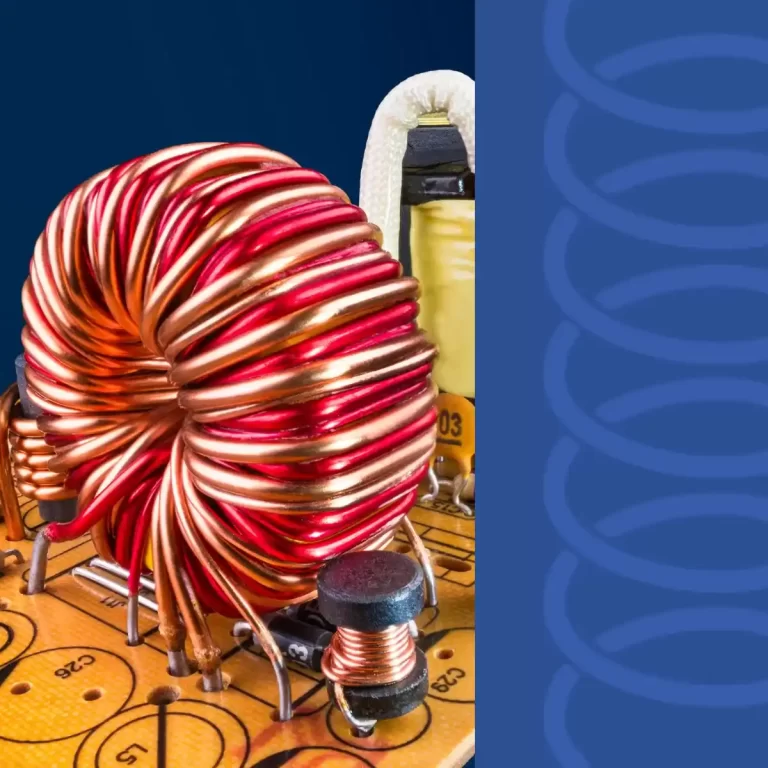
In electronics design, it’s easy to assume that if a component works in theory—or even as a prototype—it will translate seamlessly into production.
However, when it comes to wire-wound components such as inductors, transformers, and toroidal assemblies, the transition from design to manufacturable product is rarely straightforward.
This is where many projects encounter delays, cost increases, or performance inconsistencies.
The Reality Behind Wire-Wound Design
From a CAD perspective, winding layouts can appear precise and predictable. Wire paths look clean, layers stack perfectly, and clearances seem adequate.
In practice, wire behaves very differently.
It has mechanical properties that introduce variability:
- Resistance to tight bends depending on gauge and insulation
- Movement and tension during winding
- Variations in how layers settle during the process
What works visually in a design environment doesn’t always translate into repeatable manufacturing.
Common Challenges Moving to Production
Through experience in manufacturing custom magnetics, several common issues arise:
- Unrealistic Wire Routing
Designs often assume tighter bends or cleaner paths than the wire can physically achieve, especially with heavier gauges or specific insulation types.
- Layering and Winding Assumptions
Perfect layer stacking is difficult to achieve consistently without adjusting winding techniques or tooling.
- Machine Limitations
Not all designs are suited to automated winding. Some components—particularly toroids or highly specialised geometries—may fall outside machine capabilities.
- Setup and Repeatability
Even if a prototype can be built, the process required may be too complex or time-intensive for consistent production without refinement.
The Role of Prototype Iteration
This is where collaboration becomes critical.
Rather than treating a prototype as a final validation, it should be seen as part of an iterative process:
- Build initial samples
- Assess manufacturability
- Refine winding approach and materials
- Improve repeatability and efficiency
In some cases, hand winding is used for early-stage prototypes to prove feasibility. While not always suitable for high-volume production, it provides a practical pathway to validate complex designs before scaling.
Why Local Manufacturing Makes a Difference
Working with a local manufacturing partner allows for faster iteration and closer collaboration between engineers and production teams.
At Coiltek Electronics, we focus on design for manufacture—working with customer designs to ensure they can be produced reliably and consistently.
This includes:
- Reviewing designs for manufacturability
- Advising on wire selection and winding methods
- Producing prototypes and refining them collaboratively
- Ensuring the final design is scalable and repeatable
From Concept to Consistent Production
A successful magnetic component isn’t just one that performs in theory—it’s one that can be manufactured consistently, efficiently, and at the required quality level.
Bridging the gap between prototype and production requires practical experience, collaboration, and a willingness to refine designs based on real-world constraints.
For companies developing custom inductors, transformers, or other wire-wound components, engaging with manufacturing early in the design process can significantly reduce risk and accelerate time to production.
Final Thought
If a design only works on paper, it’s not ready for production.
The true test is whether it can be built—reliably, repeatedly, and at scale.
Ready to Start Your Project?
Connect with Coiltek Electronics’ specialist team to discuss your specifications.
Phone 08 8283 0222 or click the button below to request a quote.