
Our 3D Printing Services
Coiltek Electronics provides a comprehensive range of 3D printing services in Adelaide, offering advanced solutions to support both commercial and technical projects.
Equipped with modern technology and deep industry expertise, the company delivers high-quality, high-strength components, prototypes, and production parts tailored to precise specifications.
With a streamlined, efficient, and cost-effective process, Coiltek Electronics ensures reliable outcomes and exceptional service for every project.
High-Strength Parts from Prototype to Production
Equipped with state-of-the-art 3D printing technology, including the Markforged X7, Coiltek Electronics delivers high-strength, functional components designed for rapid prototyping and end-use applications, quickly, efficiently, and cost-effectively.
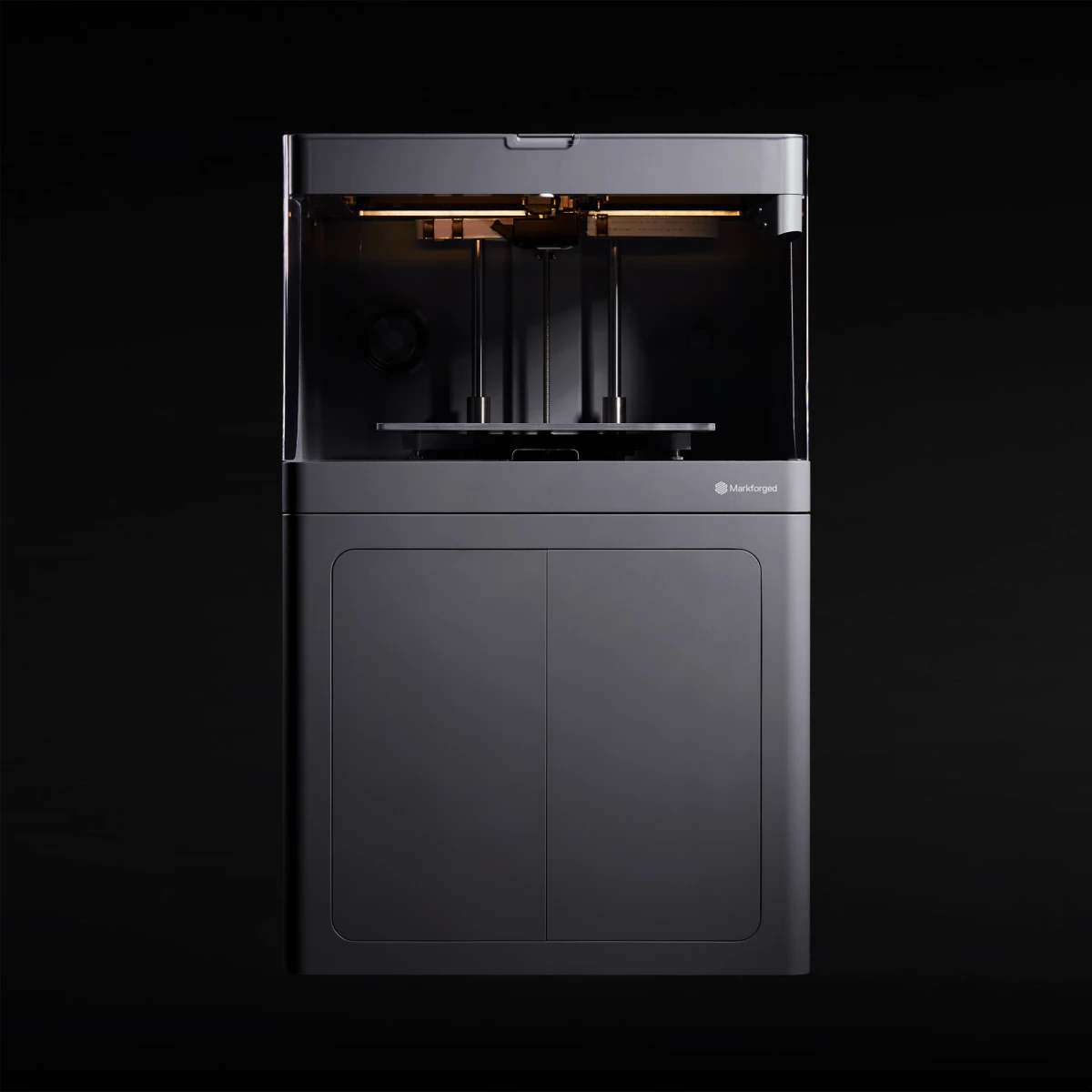
Markforged X7 3D Printer
Get industrial-grade parts in hours, not weeks. With the Markforged X7 3D printer, your engineering and design team can manufacture faster than ever before.
Stronger parts
The X7 prints continuous carbon fibre reinforced parts that are as strong as (and capable of replacing) machined aluminium. It also prints in a variety of materials including Fire Retardant, Anti-Static Nylon and ONYX
Flexible functionality
The Markforged X7 3d printer has an industrial material or print mode ideal for fabricating functional flame and chemical-resistant, energy absorbent, high-resolution and draft parts.
Reliable & accurate 3D printing
With advanced accuracy and reliability, precision-machined hardware, advanced sensors and a unique software drive, the X7 offers micron-level laser scanning for closed-loop calibration – consistently producing parts with a near-perfect surface finish.
Specifications
Print workspace: 330mm (w) x 270mm (l) x 200mm (h)
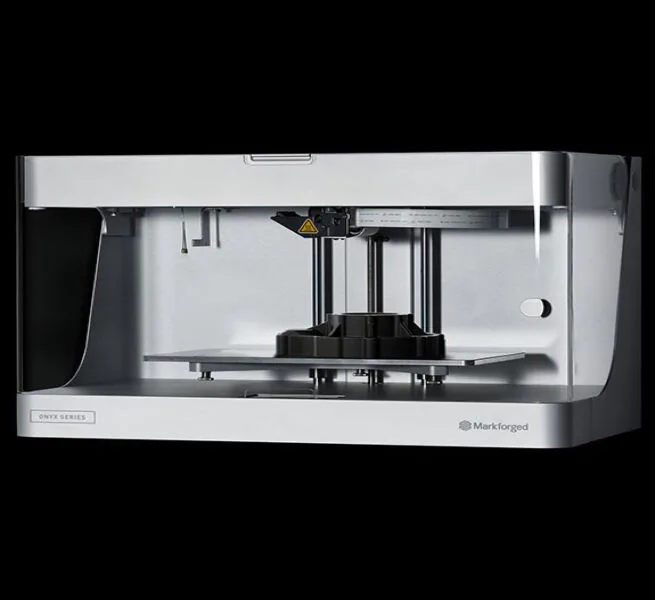
Markforged Onyx One 3D Printer
The Markforged Onyx One 3D printer is perfect for smaller units that need to be reinforced with fibreglass.
Superior strength
With an incredible tensile strength, the Markforged Onyx One 3D printer prints at almost double the strength of 6061 alloy aluminium and 20 times the strength of normal ABS plastic.
Specifications
Print bed size: 320mm x 132mm x 154mm
Z layer resolution: 100um – 200um
Printing process: Fused filament fabrication and continuous fibre reinforcement
Materials: Composite base filaments & fibreglass
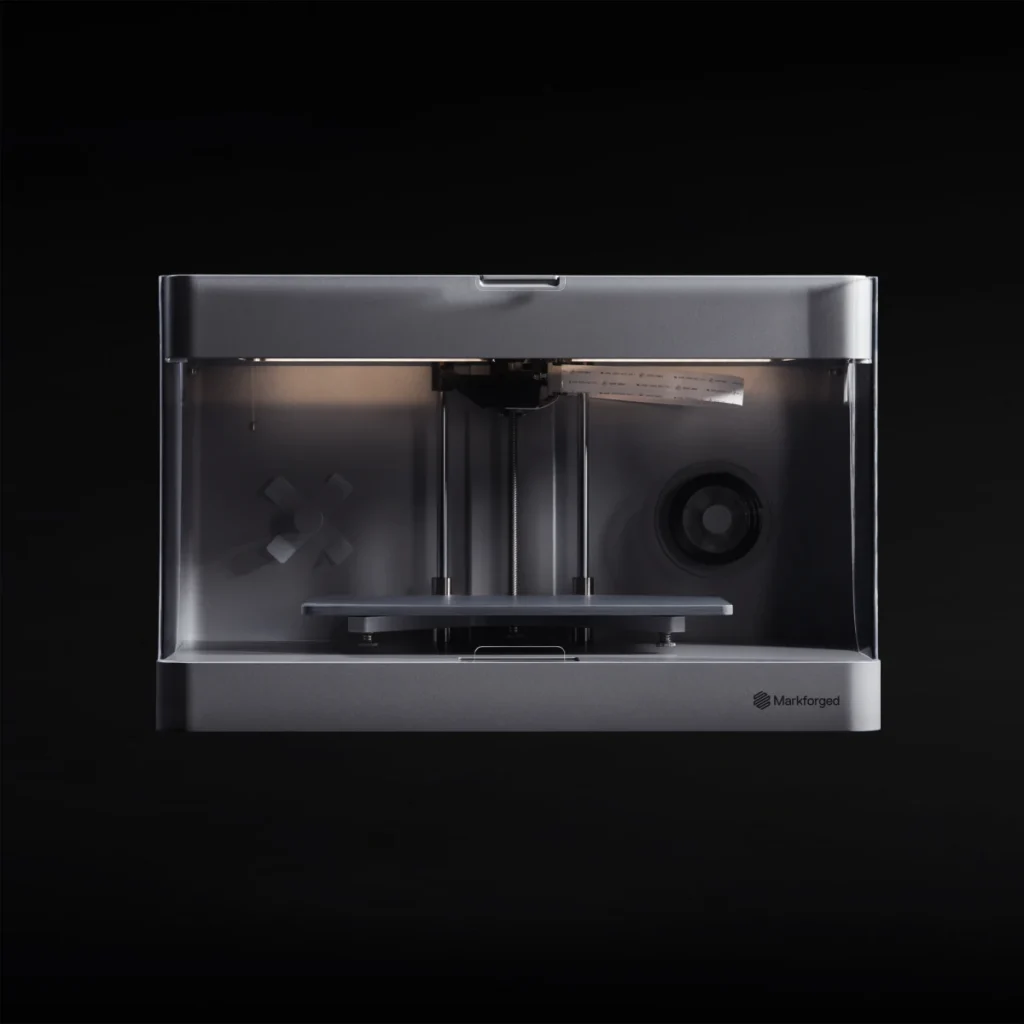
Markforged Onyx Pro 3D Printer
Get stronger, stiffer and more accurate parts with our Markforged Onyx Pro 3D printer.
Industrial-grade performance
Featuring an all-aluminium unibody enclosure built around an ultra-flat gantry system, the Markforged Onyx Pro 3D printer comes complete with kinematic bed coupling and a precision ground print platform, bringing you impressive quality and affordability.
Superior materials
Onyx plastic is 1.4 times stronger and stiffer than ABS and can be reinforced with any continuous fibre, making it suitable for anything from tooling and fixtures to end-use parts. Combining nylon with chopped carbon fibre, the 3D printer offers very strong thermoplastic with fantastic heat and chemical resistance, and an ideal printing resolution for a smooth and accurate finish.
Specifications
Print bed size: 320mm x 132mm x 154mm (12.6” x 5.2” x 6”)
Printing resolution: 0.1mm
Onyx plastic: 1.4 times stronger than ABS
Frequently Asked Questions
Why would I use a 3D printer?
It’s easier. With 3D Printing it is easier (and more affordable) to produce complex parts. Milling a complex shape is usually very difficult, whereas 3D printing is as easy as uploading the model to the printer and hitting go. It’s faster. Parts can be produced in hours rather than days. There are no tooling costs associated with 3D printing, making it especially cost effective for smaller parts. You also don’t have to set up the tooling again when you want to produce more of the same part. Parts are kept lightweight but with suitable tensile strength for many applications. Additive manufacturing also makes prototyping a breeze. It can be expensive and time consuming getting multiple iterations of a prototype manufactured via other methods. With 3D printing, the only changes you need to make are to your 3D model and the new revision can be printed straight away. It’s environmental. The Printers produce limited waste. The only waste produced are the support structures (if the design needs them) as opposed to machining offcuts, etc.
What can the latest 3D printers do?
The Markforged Onyx One can produce quality and precision parts all within a small desktop package. Currently loaded with Nylon but can also be used with Onyx. The Markforged Onyx Pro is very similar to the Onyx One, except that it can reinforce parts with fibreglass, increasing the strength of parts produced. Currently loaded with Onyx, but it can be loaded with Nylon and Precise PLA as well. The Markforged X7 is an industrial 3D printer, capable of reinforcing parts with fibreglass, carbon fibre, and Kevlar. (Kevlar is most notably used as a key component in the construction of ballistic vests, helmets, and face masks, as well as in the reinforcement of critical areas of defence vehicles, and anti-abrasive clothing, such as motorcycle safety-wear.) The X7 3D printer is also able to use a smaller layer resolution for even more precision, or it can use a larger layer resolution for much quicker printing, known as ‘Turbo mode’. The print bed is also about twice the size of the other two, making it possible to print larger components. Currently loaded with Onyx but can be used with many materials and reinforcements.
What types of components can it assist with?
Almost any industrial application that can fit on the print bed. Certain things wouldn’t be practical, such as parts for extreme temperature environments (+200°C), and you probably wouldn’t use the printer to produce anything that can be machined out of a sheet of plastic. Considering the tensile strength of the 3D printed material when reinforced, almost anything that can be done with aluminium can be done on 3D printers quicker and easier. Bespoke parts that cannot be found off the shelf are common as are coil formers and transformer bobbins. The possibilities are only limited by the designer’s imagination.
Is it only for prototyping?
No. Although commonly used for prototyping, it is practical for low to mid-sized production runs where it would be impractical to go to a process that has much higher initial start-up costs (such as injection moulding). The fact that there is zero tooling or set-up costs associated with 3D printing makes it an attractive option for prototyping. However, it’s also an attractive option for low-volume production runs. 3D printing is also very practical for one-off bespoke parts (such as replacements in assemblies) that are required with a quick turnaround.
Can 3D printing save you time and money?
Definitely. Especially in the realm of prototyping and small production runs. For example, producing formers (for winding coils): If you were getting the formers made separately, it could take more than a week for them to be shipped to the factory (weeks if using an overseas manufacturer). However, if you decided to get your formers printed in house, they could be ready later that day, depending on availability of the printers.
Would you use 3D printing for tooling samples?
Absolutely. Getting tooling samples produced via additive manufacturing can mean spotting and fixing mistakes early (and while they’re still cheap to do so) rather than needing expensive tooling modifications. The low cost and ease of modification of 3D printed parts make it extremely practical for producing tooling samples.
Can I use 3D printing for low-volume production?
Yes. The same benefits of 3D printing that make prototyping more accessible, namely the lack of tooling costs and setup, mean low-volume production runs can be turn around quickly and affordably. You can also produce parts that would be too complex to be produced via vacuum forming. It is also perfect for producing non-standard parts that can’t be found off the shelf (cable holders, snap rings, etc.) within assemblies that are being produced in low-volume production runs.
Ready to Start Your Project?
Connect with Coiltek Electronics’ specialist team to discuss your specifications.
Phone 08 8283 0222 or click the button below to request a quote.